Qutub Minar: Where Delhi’s Skyline Meets 800 Years of History
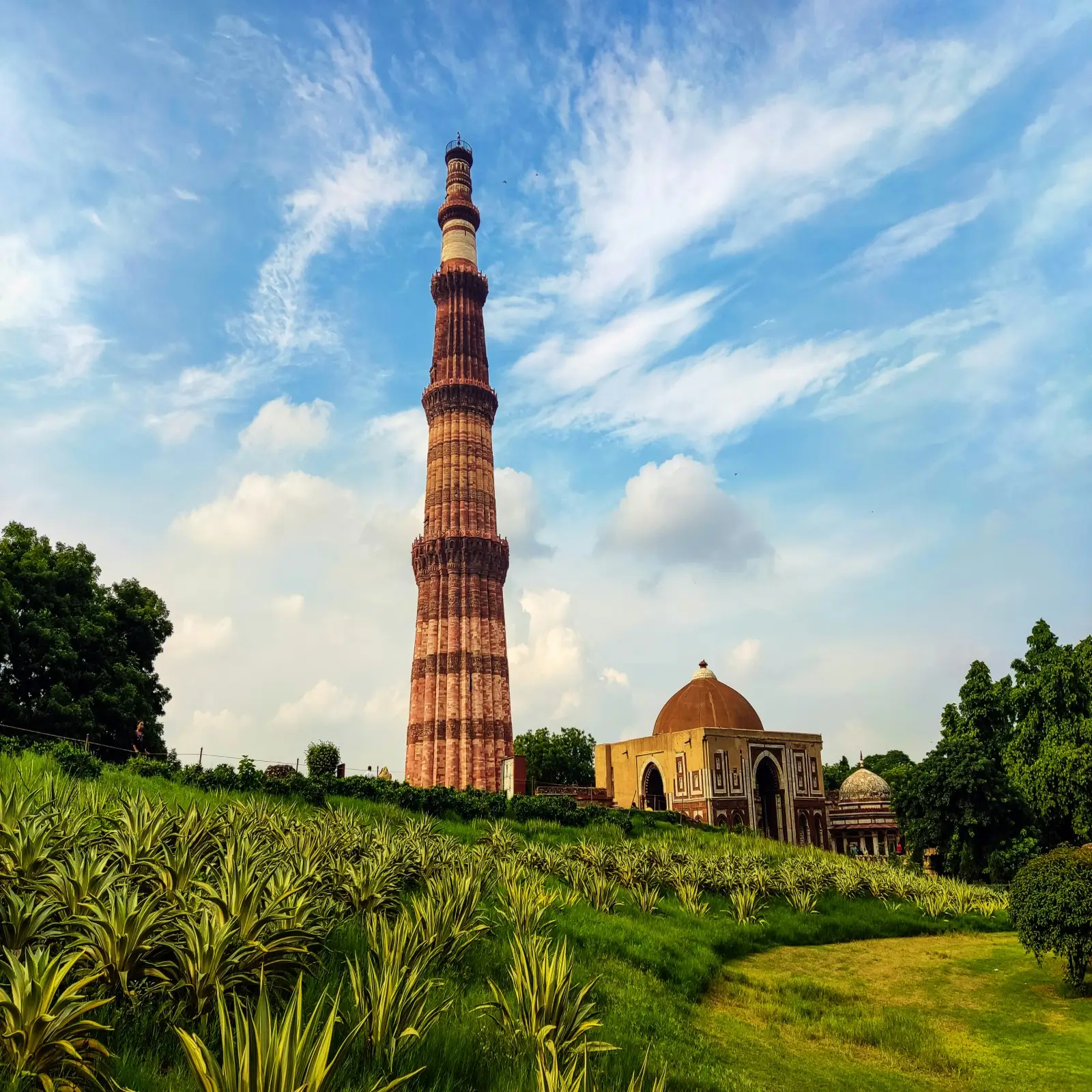
Few monuments in India capture the imagination quite like Qutub Minar. Rising dramatically above the skyline of South Delhi, the tower has watched empires rise and fall for more than eight centuries.
To some visitors, it is simply a famous landmark. But to historians, architects, and travelers seeking deeper cultural experiences, Qutub Minar represents far more than a tall structure. It tells a powerful story about the birth of the Delhi Sultanate, the evolution of Indo-Islamic architecture, and the cultural layers that shaped medieval India.
Standing within the historic Qutub Complex, the monument is surrounded by mosques, tombs, gateways, and ancient artifacts that date back more than 1,600 years. Together, these structures form one of the most important archaeological sites in India.
Whether you are a history enthusiast, architecture lover, or luxury traveler exploring Delhi’s heritage, the Qutub complex offers an experience that blends culture, history, and breathtaking craftsmanship.
In this comprehensive guide, we’ll explore everything you need to know about Qutub Minar — from its history and architecture to the fascinating monuments surrounding it.
Table of Contents
- Understanding Qutub Minar
- Architectural Design and Structure
- History of Qutub Minar
- Exploring the Qutub Complex
- Quwwat-ul-Islam Mosque
- The Mysterious Iron Pillar
- Tomb of Iltutmish
- Ala’i Darwaza
- Ala’i Minar
- UNESCO World Heritage Status
- Best Time to Visit Qutub Minar
- Travel Tips for Visiting Qutub Minar
- Why Qutub Minar Still Inspires Travelers
Understanding Qutub Minar
At an impressive height of 72.5 meters, Qutub Minar is the tallest brick minaret in India and one of the most remarkable towers ever constructed during the medieval period.
Built primarily from red sandstone and later expanded with marble elements, the tower is divided into five distinct storeys, each marked by projecting balconies supported by intricately carved stone brackets.
The tower tapers as it rises — a design technique that gives the structure stability while creating a dramatic visual effect when viewed from the ground.
The base of the tower measures about 14.32 meters in diameter, while the top narrows to just 2.75 meters.
This elegant tapering design is one of the many reasons the structure has remained stable for more than 800 years.
Every surface of the tower is decorated with inscriptions, calligraphy, and decorative patterns carved into the sandstone. These inscriptions document historical events, construction phases, and rulers who contributed to the monument over time.
Architectural Design and Structure
One of the most fascinating aspects of Qutub Minar is its architectural complexity. The structure blends Persian, Central Asian, and Indian design elements to create a unique style that later influenced many other monuments across North India.
Each storey of the minar is separated by a balcony that encircles the tower. These balconies were not merely decorative — they also helped stabilize the structure and provided functional space for the call to prayer.
The tower’s surface is covered with alternating fluted and angular patterns that create a striking play of light and shadow throughout the day.
Visitors often notice the intricate calligraphy bands running around the tower. These inscriptions contain verses from the Quran and historical records related to the Delhi Sultanate.
Even today, the level of craftsmanship visible in the stone carvings continues to impress architects and historians alike.
History of Qutub Minar
The story of Qutub Minar begins in 1199 AD, when the first ruler of the Delhi Sultanate, Qutb-ud-din Aibak, ordered the construction of the tower.
Aibak completed only the first storey before his death. The remaining storeys were added by his successor and son-in-law Shams-ud-din Iltutmish.
Over the centuries, the monument faced natural damage from lightning and earthquakes. Several rulers undertook restoration efforts to preserve the structure.
Among them were:
- Firoz Shah Tughlaq
- Sikandar Lodi
- Major Robert Smith (British engineer) in 1829
These restorations helped maintain the monument’s structural integrity while preserving its historical character.
Exploring the Qutub Complex
While Qutub Minar is the most famous structure within the complex, the surrounding archaeological site contains numerous other monuments that contribute to its historical importance.
Walking through the Qutub Complex feels like stepping into a living museum where each structure represents a different chapter of Delhi’s past.
Among the most significant monuments are the Quwwat-ul-Islam Mosque, the Iron Pillar, the Tomb of Iltutmish, the Alai Darwaza gateway, and the unfinished Alai Minar.
Quwwat-ul-Islam Mosque
Built in 1198 AD, Quwwat-ul-Islam Mosque is the earliest surviving mosque constructed by the Delhi Sultanate.
The mosque features a large courtyard surrounded by cloisters supported by intricately carved stone pillars.
Historical records indicate that many of these pillars were repurposed from earlier Hindu and Jain temples, reflecting the political and cultural transitions that occurred during the period.
Later rulers expanded the mosque by adding new arches and decorative screens.
The Mysterious Iron Pillar
Inside the courtyard of the mosque stands one of India’s most intriguing ancient artifacts — the Iron Pillar of Delhi.
Dating back to the 4th century AD, the pillar was erected centuries before the construction of the Qutub complex.
What makes the pillar extraordinary is its remarkable resistance to corrosion.
Despite standing outdoors for more than 1,600 years, the iron has barely rusted — a phenomenon that continues to fascinate metallurgists and scientists.
Tomb of Iltutmish
Constructed in 1235 AD, the Tomb of Iltutmish is one of the finest examples of early Indo-Islamic architecture.
While the exterior appears relatively simple, the interior walls are richly decorated with intricate carvings, Arabic inscriptions, geometric patterns, and floral motifs.
Some decorative elements also resemble traditional Hindu design patterns, reflecting the blending of artistic traditions during the period.
Ala’i Darwaza
Built in 1311 AD by Sultan Alauddin Khalji, the Alai Darwaza gateway is considered one of the most architecturally advanced structures of the Delhi Sultanate.
It was the first building in India to employ true Islamic architectural principles such as accurate arches and domes.
The combination of red sandstone and white marble creates a striking visual contrast that continues to impress visitors today.
Ala’i Minar
Alauddin Khalji also planned to build a tower that would be twice the height of Qutub Minar.
However, construction stopped after the first 25 meters when the ruler died.
Today the unfinished base of the tower remains inside the complex, offering a glimpse into the ambitious architectural vision of the Sultanate era.
UNESCO World Heritage Status
The Qutub Complex was designated a UNESCO World Heritage Site in 1993.
This recognition highlights the site’s outstanding historical, architectural, and cultural significance.
Today the monument attracts millions of visitors every year and remains one of the most visited heritage sites in India.
Best Time to Visit Qutub Minar
The best time to visit Qutub Minar is during the cooler months between October and March.
Early mornings and late afternoons are particularly ideal, as the golden sunlight enhances the natural color of the sandstone structures.
Travel Tips for Visiting Qutub Minar
- Visit early morning to avoid crowds
- Wear comfortable walking shoes
- Carry water during summer months
- Hire a guide to understand the history of the complex
- Spend time exploring all monuments within the complex
Why Qutub Minar Still Inspires Travelers
More than 800 years after its construction, Qutub Minar continues to inspire awe among visitors from around the world.
Its towering height, intricate carvings, and rich historical context make it one of the most remarkable monuments in India.
For travelers exploring Delhi’s heritage, the Qutub Complex offers a rare opportunity to witness centuries of history preserved in stone.
It is not just a monument — it is a timeless symbol of India’s architectural brilliance and cultural legacy.