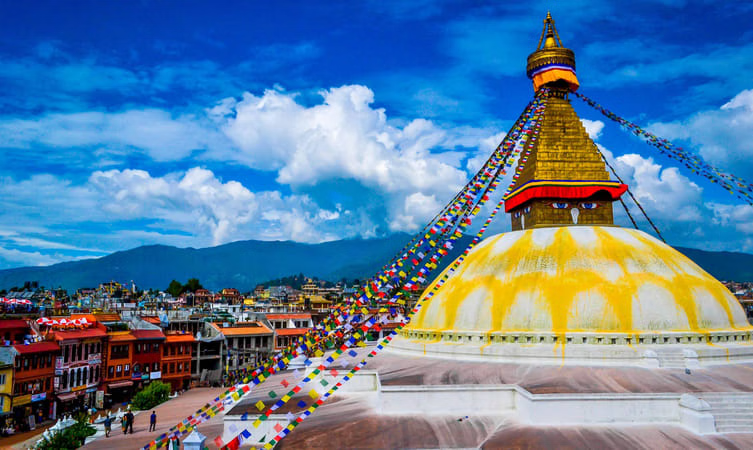
Three Ancient Cities,
One Eternal Valley
The Kathmandu Valley cradles three former royal capitals — each with its own soul, its own shrines, its own rhythm. Together they form one of the world’s most extraordinary concentrations of living heritage.
01
The Capital
Kathmandu
City One
Where Chaos Becomes
Sacred Choreography
Kathmandu is not a city you visit — it’s a city that happens to you. The medieval Durbar Square hums with devotees circumambulating the towering Taleju Temple, while incense smoke curls past centuries-old palace windows carved with erotic tantric art meant to protect against lightning.
Swayambhunath — the Monkey Temple — surveys the valley from its hilltop perch, its gilded spire rising above a forest of prayer flags. At dawn, the air smells of marigolds, butter lamps, and wood smoke. This is the smell of devotion.
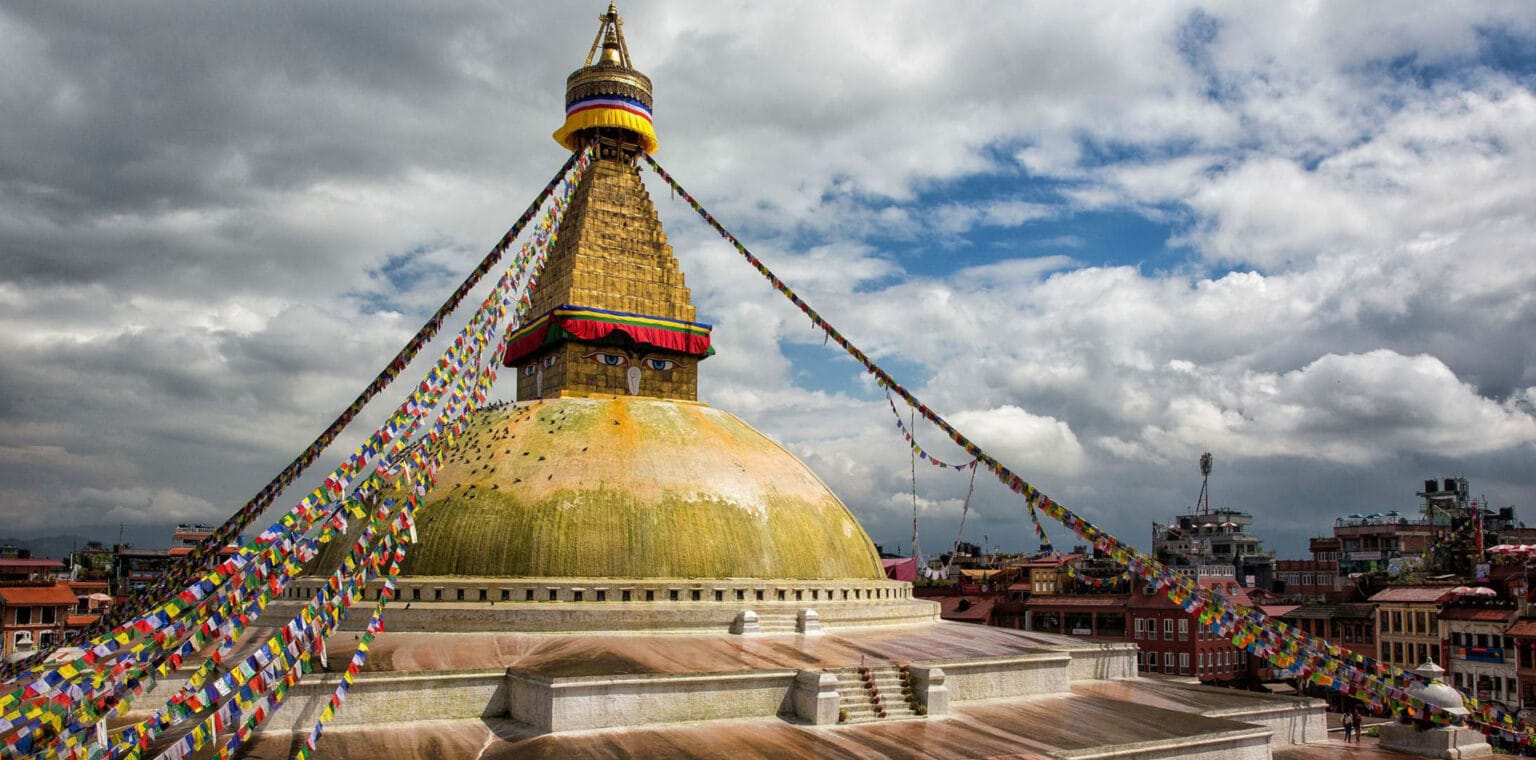
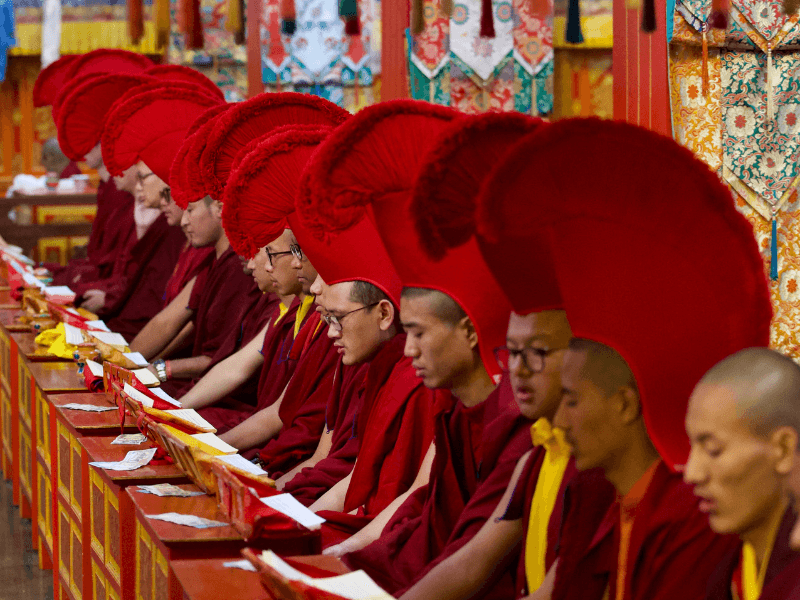
The Boudhanath Stupa, one of the largest in the world, draws Tibetan Buddhists in maroon robes spinning copper prayer wheels in an endless, meditative orbit.
Swayambhunath
Boudhanath Stupa
Pashupatinath
Thamel Quarter
UNESCO Heritage
✦ Insider Moment
Attend the Aarti ceremony at Pashupatinath Temple at dusk — the river becomes a mirror of lamp flames as priests perform ancient fire rituals to the sound of conch shells. One of the most profoundly moving experiences in South Asia.
 ️
️
02
The Ancient City
Bhaktapur
City Two
A Living Museum
Frozen in the 15th Century
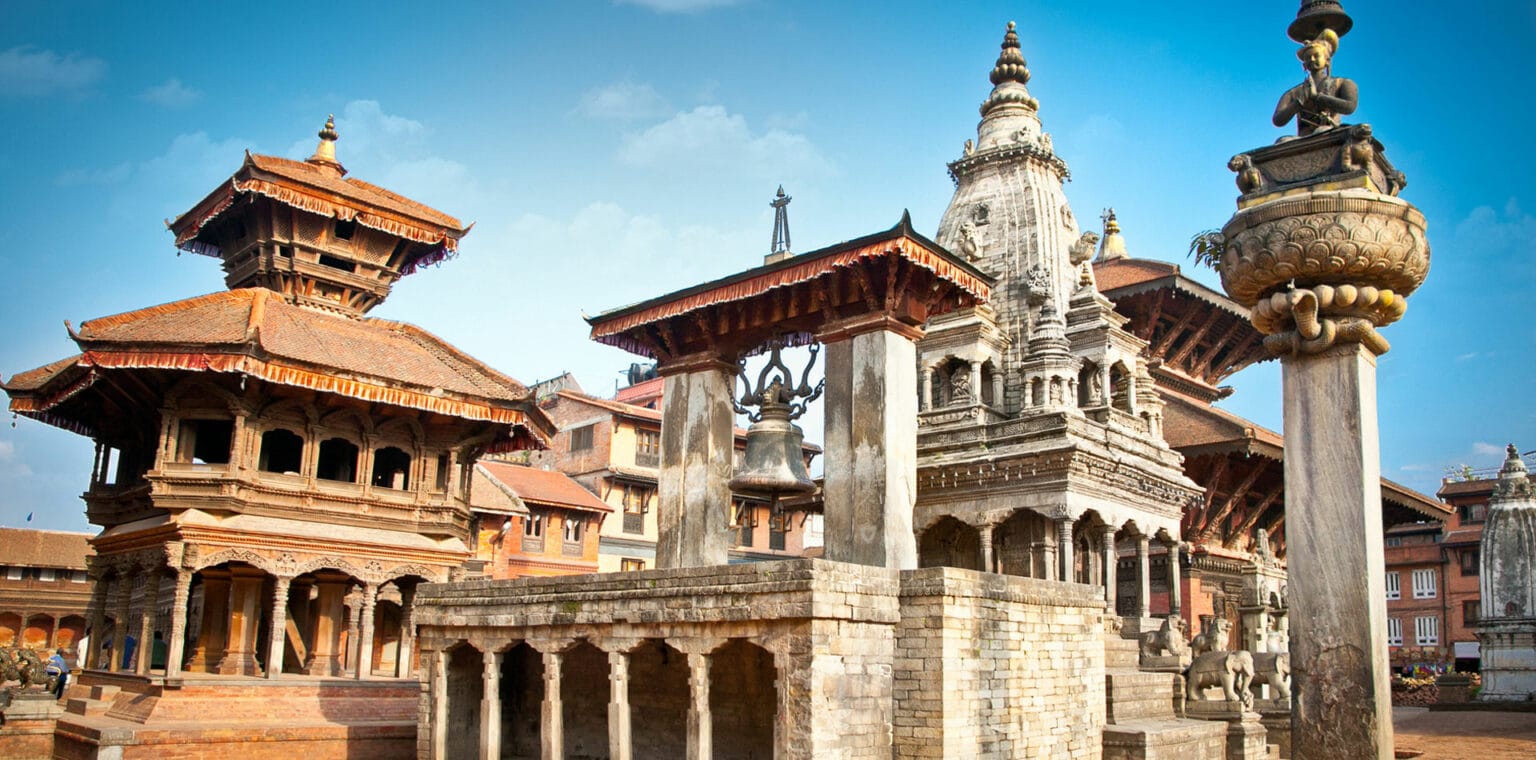
Bhaktapur is perhaps the most perfectly preserved medieval city in Asia. No traffic. Narrow lanes of warm red brick wind between palaces where master craftsmen still shape latticed wood windows — the same interlocking patterns their forebears carved five centuries ago.
The 55-Window Palace stands as a testament to Newari architectural genius. The Nyatapola Temple — Nepal’s tallest — rises in five pagoda tiers, each guarded by mythological stone figures of increasing power. Even the dust here feels ancient.
Wake up early: before tourists arrive, the courtyards belong to old women spreading mustard oil on worn flagstones, farmers laying out pottery to dry, and potters spinning clay at Pottery Square as they have done since the Malla kings ruled this valley.
55-Window Palace
Nyatapola Temple
Pottery Square
Juju Dhau Yoghurt
Car-Free Old Town
✦ Insider Moment
Request a private woodcarving workshop with a master craftsman through your concierge. Watch as chisels transform raw sal wood into the same deity faces that gaze from temple windows across the valley — and take home a piece of living heritage.
03
The Artistic Soul
Patan
City Three
The City of Fine Arts
& Buddhist Grace
Patan — or Lalitpur, City of Beauty — is where art and spirituality are one. Its Durbar Square is arguably the most harmonious public space in South Asia: a symphonic arrangement of gilt-roofed temples, stone courtyards, and bronze water spouts that haven’t run dry in four centuries.
Patan is Nepal’s centre for traditional metalwork and thangka painting. Workshops in the old lanes produce repousse copper statues and intricate mandala paintings that end up in Buddhist temples worldwide. The craftsmen here are not artisans — they are priests of form.
The Patan Museum, housed inside the old royal palace, is one of the finest collections of religious art in Asia — minimal, beautifully curated, and deeply illuminating about the Hindu-Buddhist synthesis that makes Newar culture so extraordinary.
Patan Durbar Square
Hiranya Varna Mahavihar
Patan Museum
Kumbheshwar Temple
Metal Arts Capital
✦ Insider Moment
Commission a bespoke thangka painting directly from the artist’s studio in Mangal Bazaar. The finest works take months to complete — arrange shipping through your hotel. A living artwork, made with mineral pigments and meditation in equal measure.
Nepal Through Your Senses
🪔
Scent
“The evening air arrives sweet with ghee lamp smoke, juniper incense, and the faint floral ghost of fresh marigold garlands draped on rain-worn stone deities.”
🔔
Sound
“Temple bells cascade across rooftops at dawn, layering over the deep brass moan of Tibetan horns and the soft percussion of prayer wheels spinning in monks’ weathered hands.”
🪵
Sight
“Intricate lattice woodwork frames windows where no detail is accidental — every carved deity, every knotted vine, every dancing figure is a verse from a scripture of beauty.”
Seven UNESCO Sites
in One Valley
The Kathmandu Valley holds seven UNESCO World Heritage Sites within a 20-kilometre radius — the highest density of heritage monuments on earth. Each tells a chapter of a civilisation that mastered the art of sacred architecture.
Kathmandu Durbar SquareRoyal Palace Complex
Patan Durbar SquareNewari Architecture
Bhaktapur Durbar SquareMedieval Citadel
SwayambhunathBuddhist Stupa
Boudhanath StupaTibetan Buddhism
Pashupatinath TempleHindu Sacred Site
Changu Narayan TempleAncient Vishnu Temple
Whoever You Are,
Kathmandu Meets You There
Nepal’s ancient cities are radically welcoming. From the contemplative solo traveller to the luxury-seeking family, Kathmandu Valley bends itself to your pace, your purpose, and your party.
🧳
Solo Traveller
The Contemplative
Wanderer
Kathmandu is extraordinarily safe for solo travellers and deeply rewarding for those who wish to move at their own rhythm. Meditation retreats in Boudhanath, sunrise hikes to Nagarkot, solo cooking classes in Patan — the valley opens completely to the solitary visitor.
✦ Join a guided street food walk through Asan Market solo — you’ll leave with a full stomach and new friends.
💑
Couples
Romance Written
in Ancient Stone
Few places on earth are more romantic than a candlelit courtyard dinner in Bhaktapur, watching ghee lamps flicker against 15th-century temple walls. Private heritage walks at dawn, couples’ Ayurvedic spa rituals, and sunset views over the valley from a rooftop terrace — Kathmandu is deeply intimate.
✦ Book the heritage honeymoon package at Dwarika’s Hotel — the gold standard for romantic Nepal.
👨👩👧👦
Families
Living History
for Young Minds
Children are adored in Nepal — doors open, sweets appear, and patience is infinite. Pottery workshops in Bhaktapur, kite flying from Patan rooftops, visiting the child goddess Kumari’s courtyard, and wildlife stays at Chitwan National Park make Nepal a transformative family journey.
✦ Hire a family-dedicated guide. Children in Nepal are considered auspicious visitors — the experience is magical.
🌈
LGBTQ+ Travellers
A Valley of
Inclusive Welcome
Nepal is one of South Asia’s most progressive nations for LGBTQ+ rights — same-sex relationships are legal, and the Supreme Court has affirmed protections. Kathmandu’s urban culture is cosmopolitan and open-minded. Travel with confidence; the local hospitality extends to everyone without reservation.
✦ Nepal’s Blue Diamond Society is a leading LGBTQ+ rights organisation — their cultural events offer meaningful connection.
🧘
Wellness Seeker
Ancient Healing
in Living Temples
Nepal is the birthplace of the Buddha and the wellspring of Hindu philosophy. Yoga and meditation retreats in Boudhanath and Nagarkot operate at the highest international standard, while traditional Ayurvedic practices and Tibetan healing massages have been refined over centuries of unbroken tradition.
✦ A seven-day silent meditation retreat at Kopan Monastery is a life-altering experience few will forget.
📷
Cultural Aficionado
An Embarrassment
of Riches
For those who travel to understand, Nepal is inexhaustible. The coexistence of Hinduism and Buddhism is not merely peaceful — it is syncretic, creative, and unique on earth. Deities are shared between faiths; temples serve both traditions simultaneously. This is civilisation at its most generous.
✦ Commission a custom cultural program with a Newari cultural scholar — the valley rewards deep investigation.
Timing Your
Perfect Visit
Each season offers a genuinely different Nepal. Understanding the rhythm of the valley — its festivals, its weather, its light — transforms a great trip into an unforgettable one.
Best
Autumn
October — November
Crystal-clear skies, post-monsoon freshness, festival season (Dashain & Tihar). The absolute peak for both trekking and cultural immersion. Book luxury properties 6 months ahead.
Spring
March — May
Rhododendrons in bloom, excellent visibility, Holi festival in March. Warm days and the valley is lush. Second-best season; slightly hazier than autumn but wildly colourful.
Winter
December — February
Cool, dry and uncrowded. Mornings can be cold (5°C) but afternoons are warm. Excellent for cultural exploration without the crowds. Snow on the Himalaya creates dramatic backdrops.
Monsoon
June — September
The valley turns a jewel-green. Some roads are disrupted. Not ideal for trekking but excellent for witnessing daily life. Deep discounts at all properties. The least-visited, most atmospheric season.
✦ Festival Calendar: Peak Cultural Moments
Dashain — Oct · Nepal’s biggest Hindu festival
Tihar (Diwali) — Oct/Nov · Festival of Lights
Holi — Mar · Colour festival, extraordinary in Kathmandu
Indra Jatra — Sep · Kumari chariot procession
Bisket Jatra — Apr · Bhaktapur’s fierce New Year
Buddha Jayanti — May · Buddha’s birthday at Lumbini
Sleep as Royally as
the Malla Kings
Nepal’s finest properties blend extraordinary heritage with discreet luxury. These are not hotels — they are time capsules, each one a piece of the valley’s living architecture.
🏰
Ultra-Luxury · Kathmandu
Dwarika’s Hotel
Battisputali, Kathmandu
The undisputed crown jewel of Kathmandu hospitality. Built around original carved wood elements salvaged from crumbling palaces, Dwarika’s is a living museum of Newari architecture — every beam, every window frame, every courtyard tells a story. The spa uses ancient Ayurvedic formulations. The restaurant, Krishnarpan, is one of the finest heritage dining experiences in Asia.
From USD 450/night · Rates vary by season
🏛️
Heritage Boutique · Bhaktapur
Baber Mahal Revisited
Old Stables Quarter, Kathmandu
Occupying a restored 19th-century prime minister’s stables, Baber Mahal is the city’s most characterful boutique destination. Individual rooms are individually designed; the courtyard restaurants attract Kathmandu’s creative class. Impeccable personal service, walking distance to Durbar Marg’s finest art galleries and jewellers.
From USD 220/night · Breakfast included
🌄
Wilderness Luxury · Valley Rim
Club Himalaya, Nagarkot
Nagarkot Ridge, 2,175m elevation
Perched on the eastern rim of the Kathmandu Valley, Club Himalaya offers what may be the world’s finest sunrise show: a 180-degree panorama of the Himalayan arc from Dhaulagiri to Kanchenjunga. Rooms are warm and understated, the infinity terrace unforgettable. Pair a night here with a morning bike descent back into the valley.
From USD 180/night · Sunrise guaranteed or we’d be surprised
Seven Days in
the Valley of Gods
This is not a checklist — it is a cadence. Move slowly. Linger. Let the city find you. The best experiences in Kathmandu are always unscheduled.
Day 1–2
Arrival & Kathmandu: First Impressions
Check in to Dwarika’s and let the city arrive slowly. Evening Aarti at Pashupatinath Temple. Morning private tour of Boudhanath Stupa with a resident monk who explains Tibetan Buddhist cosmology over butter tea. Afternoon in Thamel’s finest curated shops for pashmina, thangkas, and singing bowls. Rooftop dinner above the city with Himalayan views.
Day 3
Bhaktapur: Stepping Back Five Centuries
Private car to Bhaktapur (30 minutes). Arrive at 7am before the crowds. Guided walk through the Durbar Square, Taumadhi Square, and Pottery Square. Private woodcarving demonstration. Lunch on Juju Dhau (king curd) at a traditional courtyard restaurant. Afternoon free to wander without purpose — this is the entire point of Bhaktapur.
Day 4
Patan: The City of Beauty
Morning at the Patan Museum — allow three hours minimum. Private metalwork workshop in Mangal Bazaar. Lunch at Café de Patan overlooking Durbar Square. Afternoon visit to the Golden Temple (Hiranya Varna Mahavihar) and the ancient water systems of Manga Hiti. Sunset drinks at a restored courtyard café.
Day 5
Swayambhunath & Cultural Deep Dive
Dawn climb to Swayambhunath for sunrise prayers and monkey-watched meditation. Morning Newari cooking class. Afternoon at leisure — a curated spa treatment at Dwarika’s Spa using traditional herbs, or a private yoga session on a temple rooftop. Evening fine-dining at Krishnarpan (24-course Newari tasting menu — book well in advance).
Day 6
Nagarkot: Above the World
Private car to Nagarkot (1.5 hours). Check into Club Himalaya. Afternoon hike along the ridge trail through rhododendron forest. Early to bed. Pre-dawn wake-up for the Himalayan sunrise: on clear mornings, the view from Nagarkot is genuinely among the most spectacular sights on earth — a 300km sweep of white peaks igniting at first light.
Day 7
Changu Narayan & Farewell
Morning visit to Changu Narayan — Nepal’s oldest temple (4th century CE), and the valley’s most undervisited UNESCO site. Return to Kathmandu via the ancient hilltop village of Changunarayan. Final afternoon for last purchases in the curio shops of New Road. Farewell dinner on a rooftop as the city hums beneath you, prayer flags catching the last light. Nepal doesn’t let you go easily.
What to Eat in
the Valley
Newari cuisine is one of South Asia’s great undiscovered culinary traditions — complex, spiced, fermented, and deeply communal. These are the dishes you must eat.
🍲
Dal Bhat
The national dish — lentil dal over steamed rice with curried vegetables, pickles, and greens. Deceptively simple, infinitely satisfying. Refills are mandatory and unlimited.
🥟
Momos
Nepal’s iconic dumplings — steamed or fried, filled with buffalo or vegetable, served with fiery achar sauce. The great democratic street food, eaten from push-carts to fine restaurants.
🍛
Newari Khaja Set
A ceremonial feast: beaten rice (chiura), buffalo meat preparations, roasted soybeans, bara (lentil pancakes), achar, and Aila — Newari rice spirit. The full cultural experience on one platter.
🍮
Juju Dhau
The “king curd” of Bhaktapur — creamy, slightly sweet, set in clay pots that lend an earthy mineral note. Only made in Bhaktapur; unavailable anywhere else in the world. Eat it there.
🫖
Butter Tea (Po Cha)
Tibetan salted butter tea — an acquired taste that warms immediately at altitude. Served in Buddhist monasteries across the valley; a profoundly cultural drink not to be refused.
🥘
Yomari
A sacred Newari sweet dumpling of rice flour filled with molasses and sesame or chaku (sugarcane sweet) — made only during the Yomari Punhi festival. If you’re there in December, do not miss it.
Everything You Need
to Know Before You Go
Getting There
From IndiaDirect flights from Delhi, Mumbai, Kolkata, Bangalore (2–3 hrs). Also overland via Raxaul–Birganj or Sunauli border.
From UAEDirect flights from Dubai and Abu Dhabi (4–5 hrs). Multiple daily departures.
From Europe / USAConnect via Delhi, Doha, Dubai or Bangkok. Total journey 12–18 hrs.
Airport to CityPre-book hotel transfer. 20–45 mins depending on traffic. Avoid unmetered taxis.
Private HireA private car with driver for your stay (~USD 60–80/day) is strongly recommended for the ultra-luxury experience.
Visa & Entry
Visa on ArrivalAvailable for most nationalities at Tribhuvan Airport. Apply online at nepalimmigration.gov.np to save time.
Indian CitizensNo visa required. Valid Indian passport or Voter ID card sufficient. Free entry.
Cost15 days: USD 30 · 30 days: USD 50 · 90 days: USD 125
SAARC NationsFree visa for citizens of SAARC member nations.
Health & Safety
VaccinationsHepatitis A & B, Typhoid recommended. No mandatory vaccinations unless arriving from yellow fever zones.
WaterDo not drink tap water. Luxury properties provide sealed water. Carry a purification bottle for city exploration.
AltitudeKathmandu sits at 1,400m — some mild breathlessness possible. Full altitude issues only above 3,500m.
MedicalCIWEC Hospital is the city’s premier international clinic, trusted by embassies and international travellers.
SafetyNepal is generally very safe for all travellers. Standard city precautions apply. Petty theft rare in heritage zones.
Money & Connectivity
Cash vs CardCarry Nepalese Rupees for markets and local restaurants. Luxury hotels and restaurants accept cards widely.
ATMsStandard City banks (Hattisar area) are reliable. Avoid airport ATMs for large withdrawals.
SIM CardNcell or NTC SIMs available at the airport. Data is excellent value. Available instantly with passport.
InternetWiFi strong at all luxury properties. 4G coverage excellent across the valley.
BudgetLuxury travel: USD 350+ / day depending on your choices. Standard travel can be under USD 50 / day.