Kohima War Cemetery: Where Silence Speaks of Sacrifice
Continuing your journey from the vibrant Hornbill Festival at Kisama Village, the road leads to a very different side of Nagaland—a place of silence, remembrance and reflection.
High above Kohima, on the slopes of Garrison Hill, lies the Kohima War Cemetery, one of the most poignant memorials in Northeast India.
It is not simply a cemetery.
It is a place where history becomes personal.
Where the manicured lawns, quiet pathways and rows of graves invite you to pause—and think about lives that ended thousands of kilometres from home.
When you go home, tell them of us
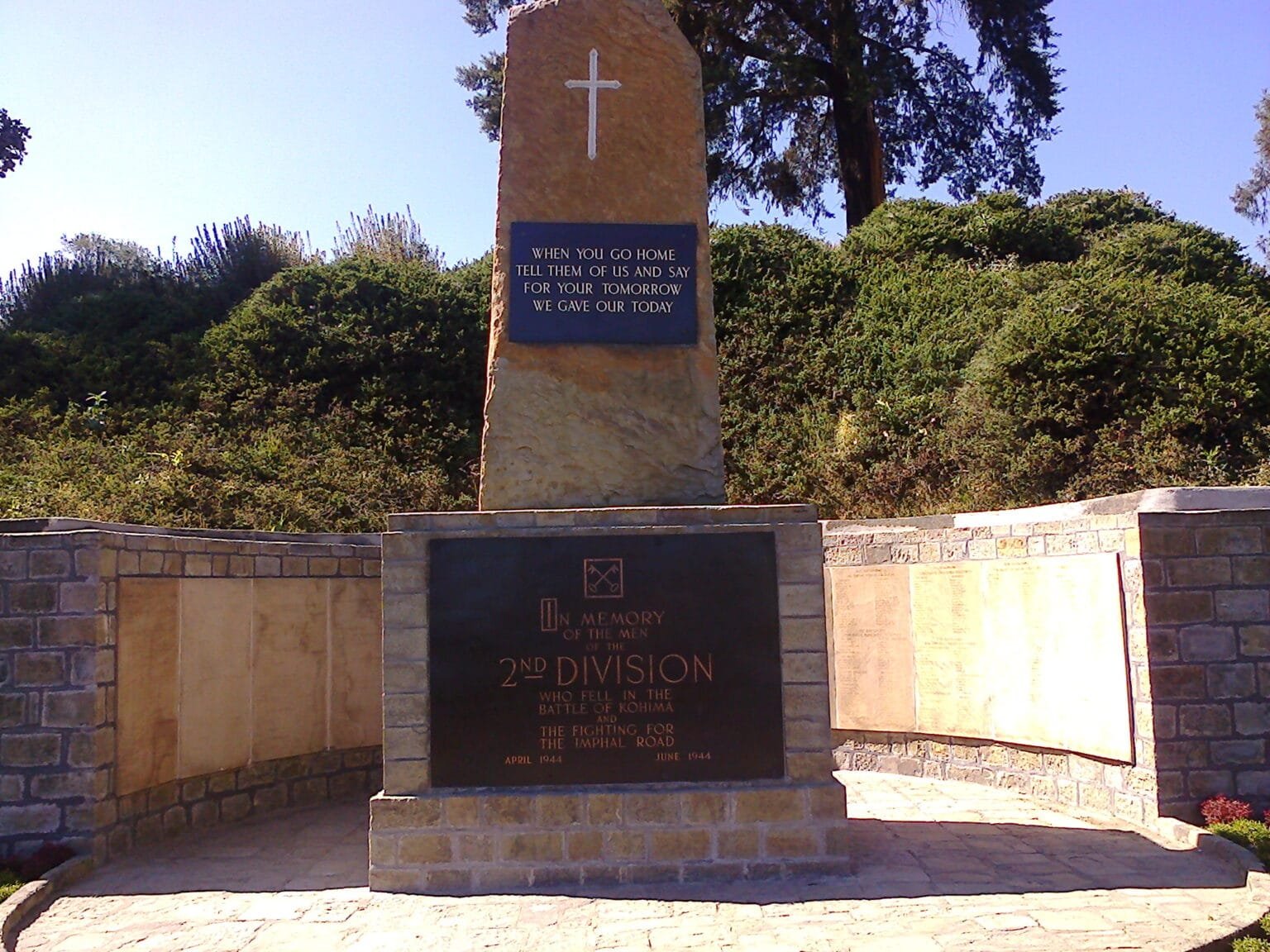
Among the most moving words found here are those engraved on the memorial to the British 2nd Division:
“When you go home tell them of us and say,
For your tomorrow we gave our today.”
The words have become inseparable from Kohima.
They were written by British classicist John Maxwell Edmonds during the First World War and were later adapted for the Kohima memorial. The sentiment itself echoes the ancient Greek tradition of commemorating soldiers who died defending their land.
Read quietly, away from the noise of everyday life, the inscription carries a weight that goes beyond the battlefield.
It asks a simple question:
What do we owe to those whose lives were given for a tomorrow they would never see?
The battle that stopped the Japanese advance
In 1944, Kohima became one of the most fiercely contested points of the Japanese offensive into British India.
The battles of Imphal and Kohima, fought between March and July 1944, became a decisive turning point in the Second World War in Southeast Asia. Japanese forces sought to break through India’s eastern frontier, but British, Indian, Gurkha and other Allied troops held their ground under extraordinarily difficult conditions.
At Kohima, the fighting became brutally close.
The area around the Deputy Commissioner’s bungalow and its tennis court witnessed some of the most intense combat of the campaign. At one point, opposing forces were separated by little more than the width of the tennis court.
The Japanese advance was eventually halted.
Their forces suffered devastating losses from combat, starvation, disease and exhaustion, and the failure of the offensive became one of the Japanese Army’s major defeats of the war.
The significance of the victory was later recognised far beyond India. In a 2013 National Army Museum public poll and debate, the battles of Imphal and Kohima were selected as Britain’s greatest land battle.
A cemetery on the battlefield
What makes Kohima War Cemetery particularly powerful is its setting.
This is not a distant memorial removed from the landscape of battle.
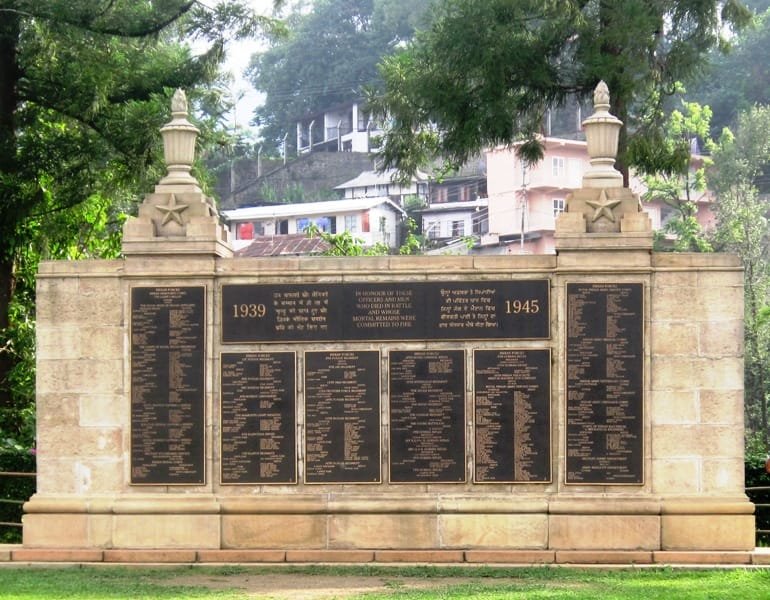
The cemetery stands on Garrison Hill, on ground connected directly with the fighting. Today, its carefully maintained terraces overlook Kohima, creating an extraordinary contrast between the peaceful landscape and the violence that once took place here.
The Commonwealth War Graves Commission maintains the cemetery, which contains 1,420 Commonwealth war graves from the Second World War. A further 917 Indian soldiers—Hindu and Sikh—are commemorated at the Kohima Cremation Memorial, having been cremated according to their faiths.
At the top of the cemetery, the memorial and its elevated position offer sweeping views across Kohima.
Stand there for a moment and the experience changes.
The hills look peaceful.
The town moves quietly below.
Yet beneath that calm lies the memory of one of the most consequential battles ever fought in this corner of Asia.
Beyond the battlefield
For the traveller, Kohima offers something rare.
It is a reminder that travel is not always about beautiful views, luxurious hotels or extraordinary experiences.
Sometimes, the most meaningful journeys are those that allow us to understand a place through the stories it carries.
The Kohima War Cemetery is one such place.
It connects the landscape of Nagaland with a global chapter of history—and with the thousands of ordinary men whose names, regiments and stories became part of it.
For visitors travelling during the Hornbill Festival, adding the cemetery to the journey creates a striking contrast: from the colour, music and cultural celebration of Kisama to the contemplative silence of Garrison Hill.
Two experiences.
One destination.
A deeper understanding of Nagaland.
A moment of remembrance
Walking among the graves, it is difficult not to reflect on how fleeting life can be.
The soldiers remembered here came from different backgrounds and different parts of the world. They fought in a conflict far larger than themselves, and many never returned home.
Whatever our understanding of the politics and history of the era, one thing remains universal:
Their sacrifice deserves to be remembered.
And perhaps that is the most important reason to visit Kohima War Cemetery.
Not simply to see it.
But to stand quietly, read the names, and remember.
When you go home, tell them of us.
Experience Kohima beyond the obvious
A journey through Nagaland becomes more meaningful when its cultural, natural and historical layers are experienced together. From the colours of the Hornbill Festival and the traditions of Kisama to the quiet slopes of Garrison Hill, Kohima reveals a side of Northeast India that stays with you long after you leave.
Discover Nagaland with BM Travel Group—where every journey is designed to go beyond the destination.